PROVISION
The PROVISION environment hosts and orchestrates user containers (Reemo Containers). It communicates with the INFRA environment over HTTPS: INFRA drives the container lifecycle (creation, management, deletion), PROVISION runs them.
See also
Containers and isolation — The concept of containers, profiles, and isolation levels.
Architecture
The PROVISION environment receives INFRA’s commands over HTTPS and runs them on a container orchestration engine. Centralized management stays in INFRA, while container execution is delegated to PROVISION. How PROVISION drives the engine depends on the engine itself.
Orchestration engines
Two engines are supported, with a different architecture:
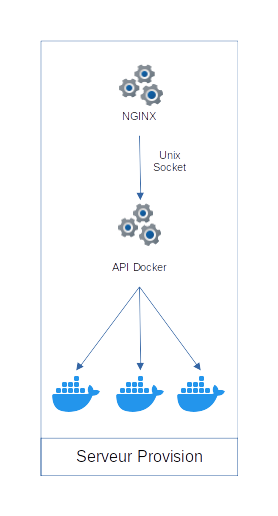
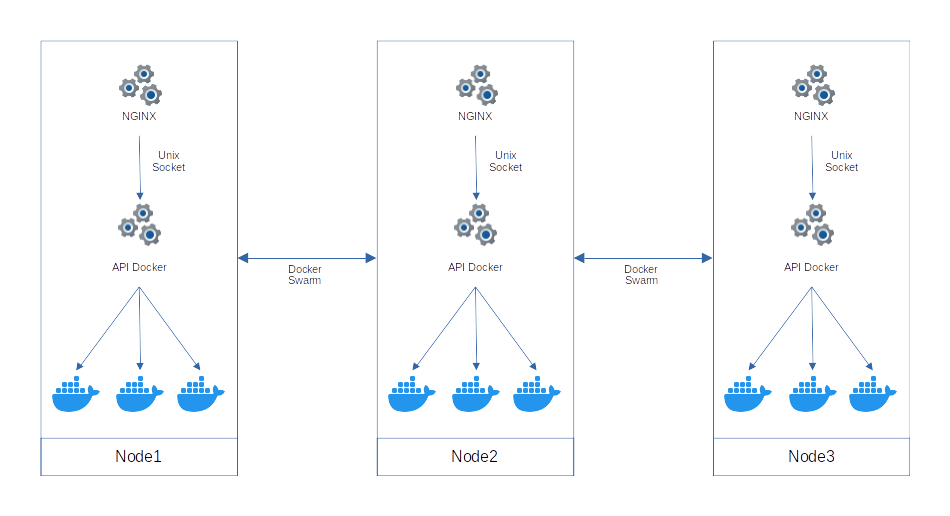
Docker Swarm: the PROVISION environment is deployed and managed by Reemo (reemo-infra role). The server exposes an NGINX front end that receives INFRA’s commands and drives the Docker engine through a local Unix socket, never exposed on the network.
Kubernetes: the cluster is not managed by Reemo. Reemo talks directly to the cluster’s API server to drive the containers, which lets you attach an existing Kubernetes environment. Kubernetes additionally enables the persistent disk for ALU images, which keeps the user’s files between sessions.
See also
Container providers — Declare a Docker Swarm or Kubernetes cluster.
Direct or appliance
PROVISION attaches to the Reemo core in two ways, depending on your cluster’s network reachability:
Direct mode: Reemo talks directly to the cluster API (Docker Swarm or Kubernetes). The cluster must be reachable from the Reemo infrastructure, via a public IP, a VPN, or strict whitelisting.
Appliance mode: a local connector, installed on your network, initiates an outbound connection to Reemo. No inbound opening is required — suited to isolated on-premises environments.
Appliance: standard or advanced
In appliance mode, the product is made of two components: the Connector (control and dialogue with Reemo) and the Provision (sandbox execution). They deploy in two ways:
Standard mode: Connector and Provision on a single machine. Simple, suited to a PoC or a simple deployment.
Advanced mode: Connector and Provision on two separate machines. Sandbox isolation on a dedicated host and independent scaling — recommended for production or isolated environments.
See also
Appliance provisioning — Deploy and size an appliance-mode provider.
Deployment (Docker Swarm)
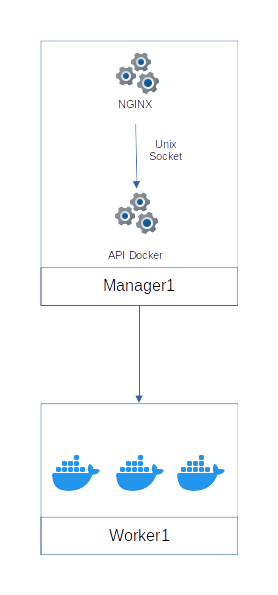
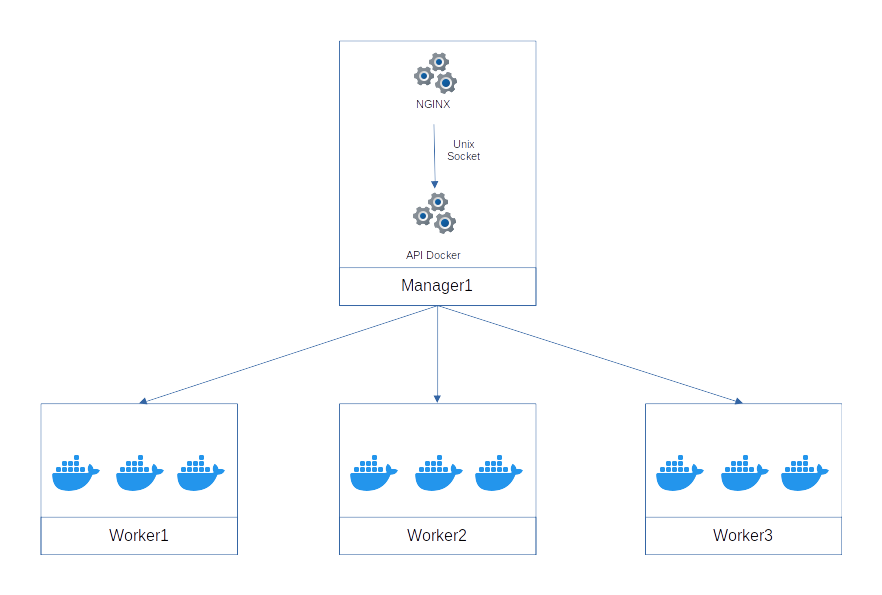
Multiple architectures are possible by combining manager and worker nodes.
Single-level Deployment
Two-level Deployment
A two-level architecture, separating managers and workers, is recommended in environments requiring a high level of security.
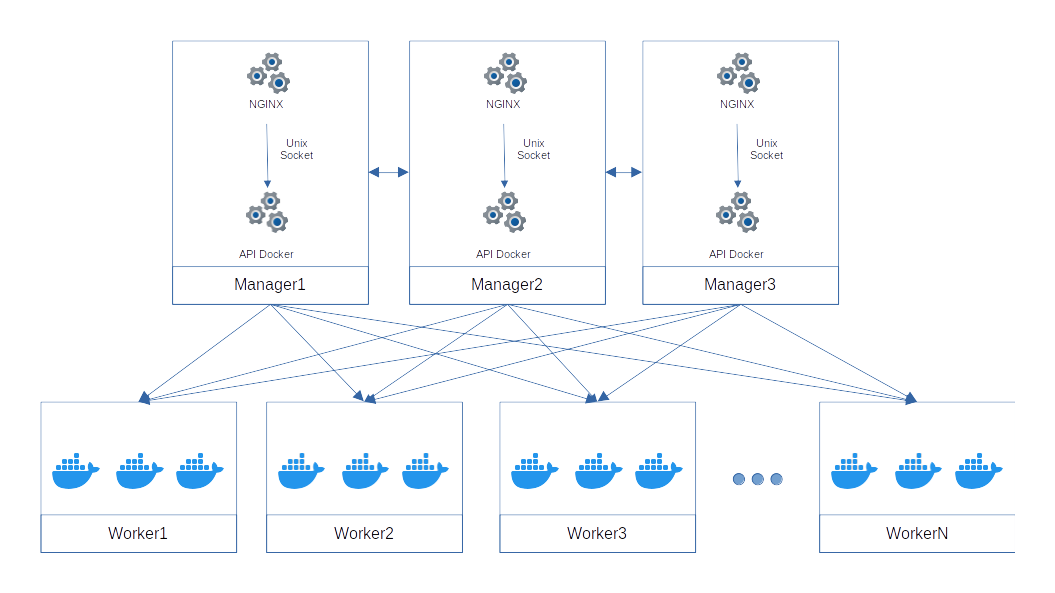
Isolation
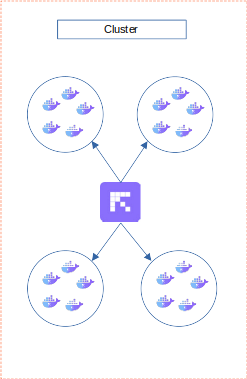
Different isolation levels are available depending on security needs.
Create multiple Provision environments to manage by client or container type.
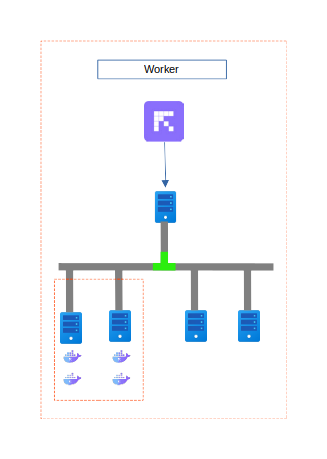
Within a Provision cluster, isolate workers from each other to dedicate them to a single type of container.
Inside a container, offer an additional virtualization layer to isolate users’ graphical spaces from each other.
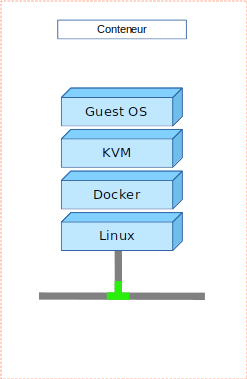
Container lifecycle
When a user requests a resource, the API (INFRA) validates the request, then PROVISION creates the container through its orchestration engine. The container then registers with INFRA to become available, and the session is established with the user.
See also
Connection lifecycle — The full flow, from the portal to the resource.
See also
Protocol and connection modes — WebRTC (ICE, STUN, DTLS) and WebSocket.